



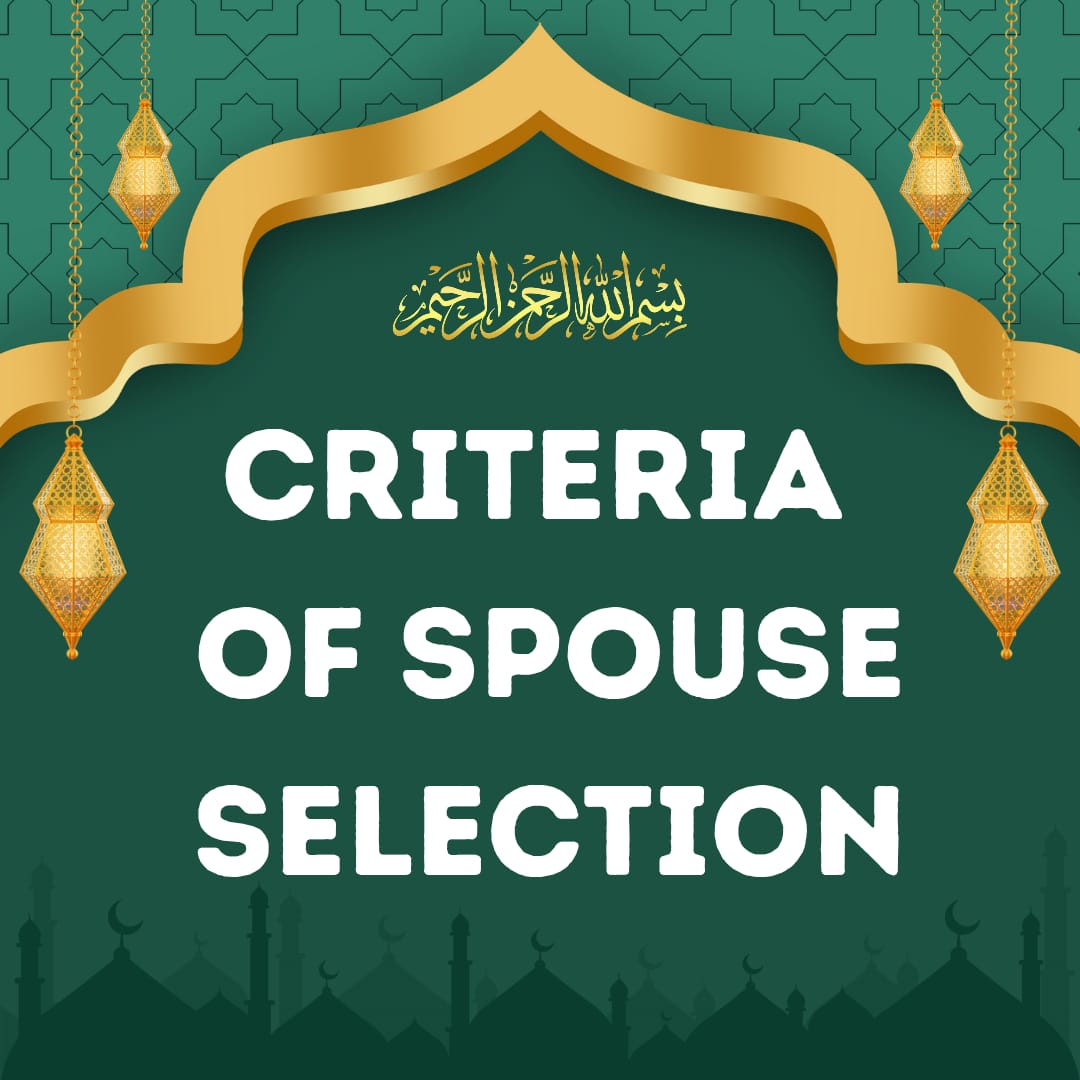

Marriage in Islam is not merely a social contract — it’s a spiritual partnership built on faith, respect, and mutual growth. When selecting a spouse, Islam guides us to look beyond outward appearances and focus on the qualities that ensure long-term peace and happiness.
In this article, we explore four essential criteria that must be considered when choosing a life partner, as taught in Islamic teachings and emphasized by the Prophet Muhammad (peace be upon him and his family) and the Imams of Ahl al-Bayt (a.s).
🌿 1. The Nobility of the Family
Islam attaches great importance to family background — not in terms of fame, wealth, or social status, but in moral nobility, purity, and religious upbringing.
Marriage is not just a bond between two individuals; it’s also a link between two families. It is unrealistic to think one can marry a person while ignoring their roots and environment. As the Prophet (s.a.w.a) beautifully said:
“Marry from a decent family, for genealogy has a strong effect.”
(Wasail al-Shia, vol. 14, p. 29)
He also advised:
“Be very careful about where you place your seed (lineage), for genealogy has a profound impact.”
🌼 Why Family Background Matters
-
Shared Traits and Values:
A person inherits many of their moral, spiritual, and emotional traits from their family — not only through genetics but also through upbringing and environment. -
Lifelong Connection:
Even if you claim “I’m marrying the person, not the family,” the reality is that the family remains a permanent part of your life. You’ll interact with them on countless occasions, and their behavior will affect your peace. -
Reputation and Respect:
The family’s name — whether good or bad — will always reflect upon the spouse. A corrupt or disrespectful family can create tension and embarrassment, while a noble family adds honor and ease to life. -
Influence on Children:
The Prophet (s.a.w.a) also said:“Choose a proper place for your seed, for children resemble their maternal uncles.”
(Jawahir, vol. 29, p. 37)
This means the family’s values and characteristics will naturally influence the next generation.
🌸 A Prophetic Warning
The Prophet Muhammad (s.a.w.a) once said:
“Beware of the greenery growing on a dunghill.”
When asked what that meant, he replied:
“A beautiful woman raised in a corrupt family.”
(Wasail al-Shia, vol. 14, p. 56)
This saying reminds believers not to be deceived by beauty alone. True worth lies in piety and noble character.
💭 Reflection
While it’s true that sometimes good children emerge from bad families and vice versa, these are exceptions. Islamic law guides us according to what happens most of the time. Exceptions do not change general principles.
If, however, a person from a troubled family has clearly detached themselves from that environment and proven their integrity, then marriage may still be considered — but with wisdom and careful evaluation.
💡 2. Reason and Intelligence
The second essential criterion in spouse selection is intellect (‘Aql).
A sound mind is the foundation of a healthy marriage. It helps partners make wise decisions, handle difficulties, and nurture their home with balance and patience.
Imam Ali (a.s) said:
“Avoid marrying a foolish person, for their company is a calamity, and their children will also be wasted.”
(Usool al-Kafi, vol. 1, Kitab al-‘Aql wal Jahl, Hadith 3)
🌿 The Role of Reason in Marriage
Reason acts like a light in the path of life, showing us what is right and wrong, what builds and what destroys. Without intellect, even love can turn into pain and regret.
The tragic story of a man named Ghulam illustrates this point.
He married a beautiful woman despite realizing she had weak intellect. Over time, her lack of understanding created constant conflict. She couldn’t manage household duties or connect emotionally. Eventually, the marriage collapsed — leaving both partners heartbroken.
🕊️ What True Intelligence Means
Imam Ja’far al-Sadiq (a.s) defined intellect beautifully:
“Intellect is that by which Allah is worshipped and Paradise is earned.”
When asked about Muawiyah’s cleverness, the Imam replied:
“That was deception and trickery — something resembling intellect, but not intellect itself.”
(Bihar al-Anwar, vol. 103, p. 237)
True intellect is not mere cunning or worldly smartness. It is the wisdom that leads one to righteousness, fairness, and moral responsibility.
❤️ 3. Physical and Mental Health
Islam values health — both physical and spiritual — as a foundation for a strong and peaceful marriage. While minor illnesses are manageable, chronic or incurable diseases that affect marital duties should be considered seriously before marriage.
⚖️ Why Health Matters
Health problems can affect emotional stability, sexual fulfillment, and family life. For example, one man named Hadi married a woman with a serious physical deformity out of sympathy. Over time, this caused frustration and psychological tension. Their marriage eventually broke down, leaving both in distress.
Islam therefore prohibits marriage with individuals suffering from certain serious diseases — such as leprosy or insanity — if these conditions will cause lifelong harm or suffering to the spouse.
“Do not harm yourself or others.” – Prophetic Principle (Hadith)
However, this does not mean that those with disabilities must remain unmarried. Islam encourages finding suitable partners who understand and accept each other with honesty and compassion.
🌷 4. Beauty and Attraction
Beauty is a blessing from Allah, and Islam does not deny its importance. However, it should never be the only reason for marriage.
💖 The Role of Attraction
Mutual attraction helps spouses maintain love, modesty, and emotional satisfaction. When a husband or wife feels content with their partner’s appearance, they are less likely to look elsewhere. The Prophet (s.a.w.a) said:
“When one of you intends to marry a woman, he should inquire about her hair as well as her face, for the hair is one of the two beauties.”
Islam also encourages both spouses to beautify themselves for one another.
Imam Ja’far al-Sadiq (a.s) once dyed his hair with henna. When asked why, he said:
“Yes, I beautify myself for my wife, for adornment increases a woman’s modesty.”
⚠️ The Danger of Superficial Attraction
Beauty should never outweigh faith, modesty, and good character. The Prophet (s.a.w.a) warned:
“Whoever marries a woman only for her beauty will find unpleasantness in her.”
Beauty without moral values is like “greenery growing upon a dunghill” — attractive on the outside but rooted in decay. A truly beautiful spouse is one whose heart is pure and whose manners reflect faith.
🌼 The Balance of Qualities
Islam teaches us that while beauty and attraction are important, they must be accompanied by faith (iman), modesty (haya), intellect (‘aql), and noble family background. When all these qualities come together, they form the foundation of a blessed and lasting marriage.
“Those who believe and do good deeds — Allah will place love for them in the hearts of others.”
(Qur’an 19:96)
Such love is not fleeting. It grows deeper with time because it is based on sincerity and the pleasure of Allah.
🌙 Conclusion
Choosing a spouse in Islam is one of the most important decisions in life. It should be made with reflection, not emotion; with wisdom, not haste.
A righteous partner is a source of peace, mercy, and eternal companionship — not just in this world, but in the Hereafter.
Islam’s guidance on marriage protects individuals, strengthens families, and builds a society rooted in purity, love, and divine purpose.
🕌 Key Takeaways
-
Look for faith, reason, and noble character over wealth or looks.
-
A family’s moral reputation greatly influences the success of marriage.
-
Good health and emotional stability are essential for marital harmony.
-
Beauty should complement, not replace, faith and modesty.
-
True love in Islam is built upon taqwa (piety) and mutual respect.
📚 References
-
Jawahir, vol. 29, p. 37
-
Wasail al-Shia, vol. 14, p. 29
-
Wasail al-Shia, vol. 14, p. 56
-
Usool al-Kafi, vol. 1, Kitab al-‘Aql wal Jahl, Hadith 3
-
Bihar al-Anwar, vol. 103, p. 237


Leave a Reply